
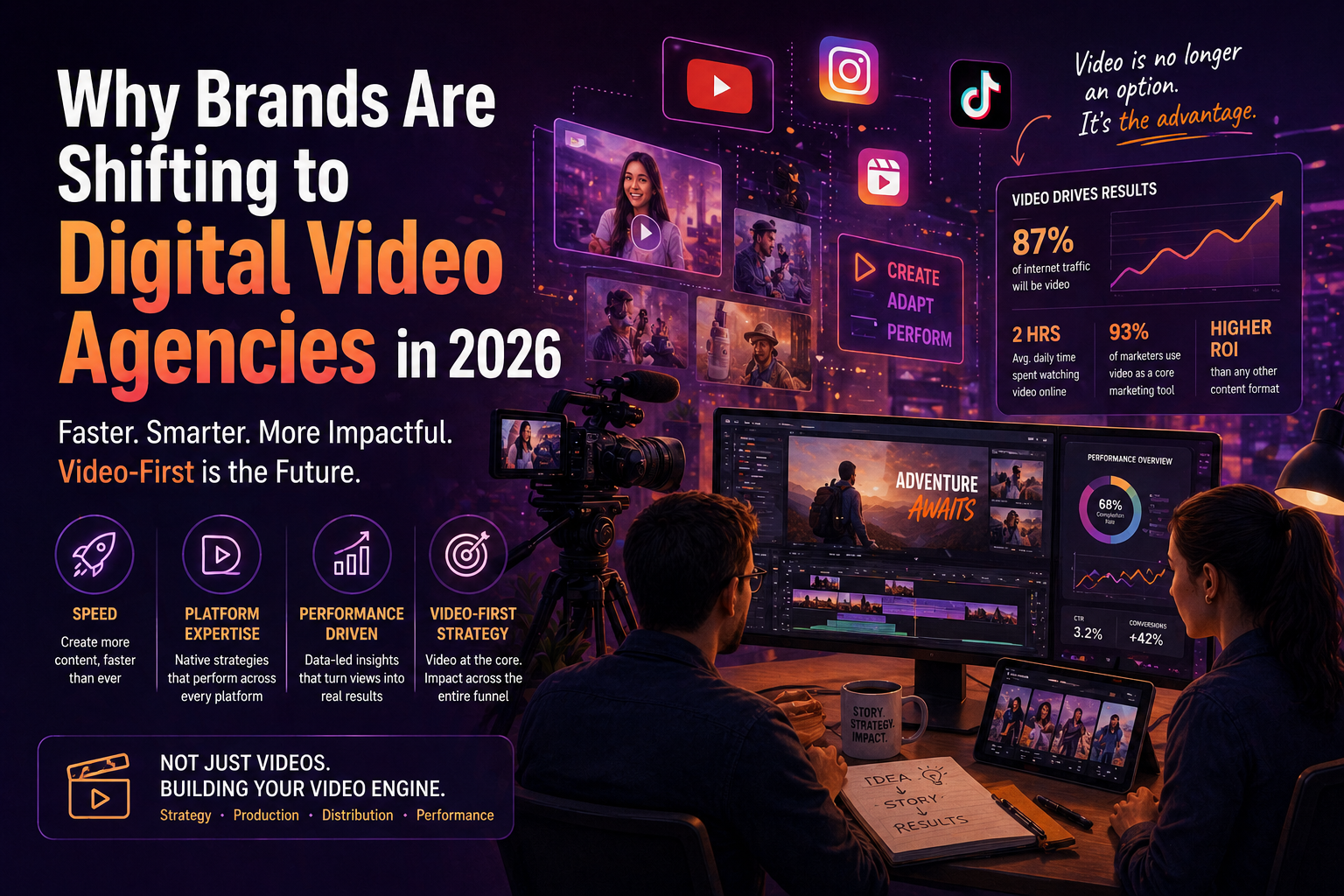
In 2026, video is no longer a nice-to-have add-on – it is the backbone of modern marketing strategy, forcing brands to rethink how they plan, produce, and scale content. As a result, more marketers are partnering with a dedicated digital video agency to keep up with the pace, complexity, and performance expectations of today’s campaigns.
Rise of Digital-First Marketing
Digital consumption has become overwhelmingly visual, with video expected to account for the vast majority of internet traffic and audiences spending close to two hours a day watching online video. Platforms from YouTube to Instagram and TikTok have leaned into this shift, prioritizing video in their feeds and recommendation engines so brands that lead with video naturally gain better reach and visibility.
For marketers, this means “digital-first” now effectively means “video-first.” A large majority of businesses already use video in their marketing, and most who haven’t yet are planning to start, treating it as a core channel rather than a side experiment. Video formats are also increasingly embedded across the ecosystem – websites, social feeds, email, and even shopping experiences – making consistent video storytelling a strategic necessity instead of a campaign-specific tactic.
This environment rewards brands that can ideate, produce, and adapt video content quickly for multiple platforms, which is exactly where a specialized digital video agency fits in.
Benefits of Digital Video Agencies
Working with a digital video agency is less about outsourcing one-off production and more about building an always-on content engine. The right partner combines creative, production, media, and analytics capabilities tailored to how video actually performs on digital platforms.
Speed
Campaign cycles have compressed dramatically – trends peak in days, not months – and brands can’t afford six-week production timelines for a 30-second asset anymore. Modern agencies leverage lean crews, modular shooting plans, and AI-assisted tools to move from script to publish in days, enabling brands to respond to trends, test multiple angles, and refresh creatives without burning out internal teams.
Instead of treating each video as a standalone “film,” a digital video agency plans for a system of outputs: hero edits, cutdowns, reels, stories, and micro-content that can fuel performance and organic channels simultaneously. This modular approach means more assets per shoot and a steady stream of content that keeps your brand visible in crowded feeds.
Platform expertise
Every platform now runs on some version of a video-first algorithm, but each one rewards different formats, structures, and signals. A digital video agency understands the nuances of YouTube watch time, Instagram Reels hooks, TikTok trends, Meta’s ad placements, and video SEO, and bakes those rules into scripts, visuals, and edits from day one.
This platform-native thinking goes beyond aspect ratios and durations. It includes designing for thumb-stopping first seconds, subtitle styling for sound-off viewing, pacing that matches user behavior, and creative concepts that can carry across paid and organic. The result is video that is not only on-brand but also algorithm-friendly, maximizing discoverability and engagement without constant trial and error.
Performance tracking
Video used to be hard to measure, but digital has changed that. Today, marketers can track view rates, watch time, click-through, conversions, and revenue attribution across campaigns in near real time. A performance-focused digital video agency treats this data as feedback, not just reporting – feeding insights back into creative decisions, hooks, offers, and formats.
Because many brands now see video delivering some of the highest ROI of any content format, there is more pressure to prove impact and optimize continuously. Agencies that live inside dashboards can identify winning variations quickly, spin off new iterations, and retire underperformers, ensuring that every new video is smarter than the last.
Traditional vs Digital Agencies
Traditional creative or mainline agencies were built for big TVCs, long planning cycles, and a small number of flagship campaigns per year. Their strength lies in brand platforms and big ideas, but their structures can struggle with the volume, speed, and granularity that digital video demands.
Digital video agencies, by contrast, are built around the realities of always-on content and multi-platform distribution. They design strategies where video is the primary content format, and other channels – blogs, SEO, paid search, email – are used to amplify and repurpose that video footprint. Instead of producing a single hero asset, they focus on content systems: explainer series, UGC-style ads, testimonials, reels, product walkthroughs, and vertical-specific stories that can be sliced and adapted.
Measurement is another key difference. Traditional campaigns often rely on brand lift studies and quarterly reports, whereas digital-first agencies work with weekly or even daily performance data, running A/B tests on hooks, layouts, and calls-to-action. For brands under pressure to justify spend and scale what works, that agility and accountability is a major reason to shift their video work to digital-native teams.
Future Trends
Looking ahead, digital video in 2026 and beyond will be shaped by both platform changes and AI-driven production. Platforms are moving toward video-first algorithms and automated creative at scale, where advertisers can feed in a product and a budget and let the system generate and personalize variations. At the same time, shoppable video, livestream commerce, and interactive formats are making video a direct revenue channel, not just a top-of-funnel awareness tool.
On the production side, AI is transforming how quickly and affordably brands can create localized, personalized, and experimental content. Tools for AI-generated video, avatars, and automated editing are already cutting timelines from weeks to days and reducing costs significantly while enabling more creative variations. As AI-generated content proliferates, however, authenticity and proof will matter more – brands will need agencies that can blend automation with genuine storytelling, real customers, and transparent messaging.
Digital video agencies that master this balance – using AI for speed and scale while doubling down on strategy and human creativity – will be best positioned to help brands stand out in increasingly crowded feeds.
If your brand is still treating video as an occasional project, 2026 is the year to build a true video-first engine with the right digital video agency partner. At Purple Flicks, we help brands plan, produce, and scale performance-led video content that works across platforms and stages of the funnel.
To dive deeper into the strategy behind high-performing video, explore our main resource hub on the page, where we break down frameworks, formats, and examples you can apply to your brand. When you are ready to turn that strategy into consistent, platform-smart execution, learn more about how we work and what we offer on our Corporate Video Production, and let’s start building your next wave of digital video campaigns together.





Leave a Reply