
Video is one of the most powerful storytelling tools we have today. It can move people, shift perceptions, and build long-term brand love in ways very few formats can.
And yet, despite good intentions, talented teams, and healthy budgets, most brand film videos still miss the mark.
It’s not that brands don’t care; rather, it’s that they usually fail to consider how movies work.
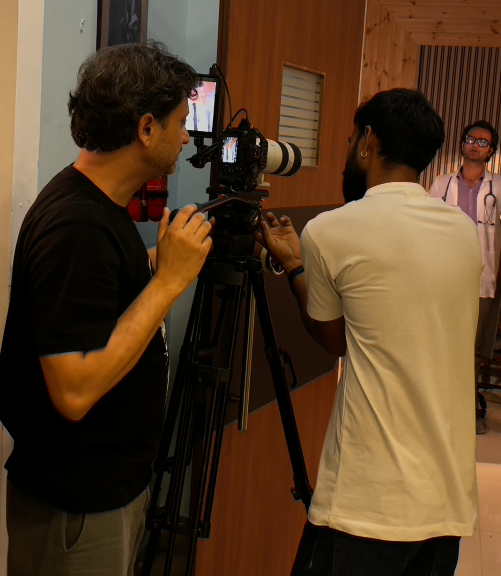
I have spent my life between two worlds: the world of cinema and the world of brands. I began my journey as an editor, spearheading the launch of five pioneering television channels at UTV, long before “content” became a buzzword. Since then, as a filmmaker, I have had the opportunity to work on over 200 projects and more than 40 brand films, exploring different industries, formats, and audiences.
Most of what I watch is more about selling films and creating content accordingly, but it fails to connect with emotions and the brand message. This article is an insider’s view—less about platforms and KPIs and more about the craft of storytelling that often gets overlooked.
1. Starting with the Message, Not the Story
One of the biggest mistakes brands make is starting with what they want to say, instead of what the audience wants to feel.
“We must express our values.”
“We need to be innovative.”
“Scale is something we need to discuss.”
All good objectives. However, movies are not like presentations. In movies, meaning develops through narrative rather than announcements. A movie feels forced when its message takes precedence over the plot. Audiences notice it right away. They might see it, but they won’t recall it.
The process is reversed by great brand films. They begin with a human truth, an emotion, or a moment and allow the message to emerge organically.
2. Confusing Information with Engagement
Many brand videos try to say too much in too little time.
Multiple talking points, multiple stakeholders, and multiple approvals. The final result? A film that is technically correct but emotionally lacking.
Clarity and emphasis are more important for engagement than information richness. A single, well-crafted idea will always outperform five diluted ones.
3. Treating Craft as Secondary
In a marketing-first approach, craft is often treated as executional—something to be “handled” after the strategy is locked.
But in filmmaking, craft is strategy.
- Lighting sets the mood.
- Sound design shapes emotion
- Editing controls rhythm and attention
- Camera movement defines how we experience a moment
When these elements are compromised—due to timelines, over-briefing, or cost-cutting—the film loses its soul. And no amount of media spending can compensate for that loss.
Cinematic quality is not about being glossy. It’s about being intentional.
4. Writing Scripts That Sound Like Brands, Not People
Dialogue that sounds like it was taken from a brand deck is another frequent mistake.
Taglines are not spoken by real people.
The magic occurs when characters in films pause, hesitate, and genuinely feel. Observation, or paying close attention to what your audience values and cares about, is the foundation of true authenticity. People are more receptive to a brand film that feels intimate. They simply keep scrolling if it seems fake.
5. Overlooking the Director’s Perspective
Often, directors are brought in too late—once the script is locked and decisions have already been taken.
But a director does not just “shoot” a film. They interpret it.
They see what’s unsaid.
They understand subtext.
They know how to translate intention into emotion.
In the most successful projects I’ve worked on, brands allowed space for collaboration early on. That’s when filmmaking becomes transformative and not transactional.
6. Measuring Success Too Narrowly
Views, likes, and completion rates matter. But they’re not the full story.
Some films are meant to build trust. Some are meant to signal leadership.
Some are meant to shift perception over time.
Cinema has taught us patience. Not every story delivers impact instantly but the right story leaves a residue. It stays with you.
Brands that understand this, play the long game. And that’s where the true storytelling power lies.
Final Thought
The irony is that brands today have more access to filmmaking tools than before. But tools alone don’t create meaning.
When brands stop treating video as a marketing checkbox and start respecting it as a cinematic medium, something changes. The work becomes quieter but stronger. Simpler but deeper.
And most importantly, it becomes something people actually want to watch.
That’s when video stops being content—and starts becoming cinema.




Leave a Reply