
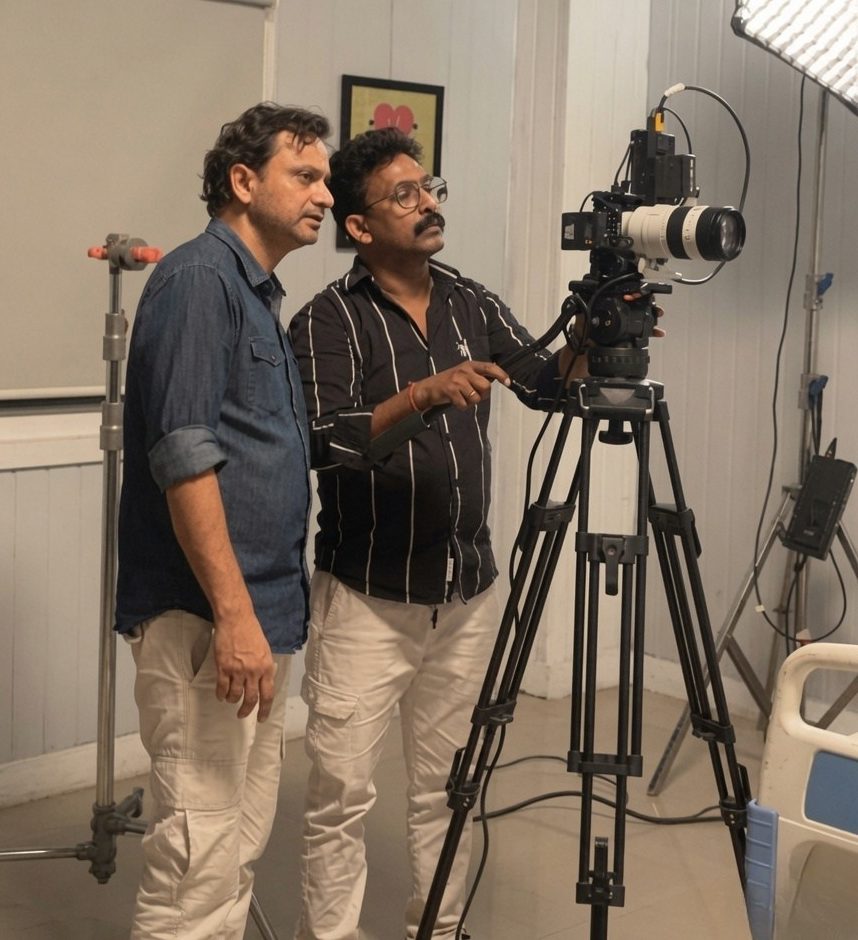
By Arvind Gupta, Director & Filmmaker | Purple Flicks
Nobody prepares you for the moment when a creative idea arrives in the middle of a client call. It does not knock. It does not wait for a convenient time. It arrives when your mind is supposed to be somewhere else entirely, when a budget discussion is happening, when a shoot schedule is being finalised, when the business side of things is demanding your full attention. After 16 years of directing films and running a production house, I have made peace with one truth: creativity and business do not share a calendar. And they never will.
Where It All Began
I started my career as an editor. That training taught me to think in structure, in rhythm, in the logic of how a story moves from one moment to the next. By the time I launched Purple Flicks in 2009, I had already spent years working across some of the biggest media houses in the country. The experience was there. The industry understanding was there. What nobody prepares you for is the shift from being the person who makes the work to being the person who is also responsible for everything around it.
Planning Before the Camera Rolls
One thing I learned early is that the real work happens before production begins. Every detail, every decision, every potential problem has to be thought of in advance. When pre-production is done well, the shoot has a clarity that cannot be manufactured on the day. This discipline of thinking ahead, of preparing thoroughly before anything is filmed, has also shaped how I approach the business side. I do not wait for problems to arrive. I try to anticipate them, plan for them and resolve them before they become disruptions. That habit, developed on set, turns out to be just as useful in a client meeting.
As the Work Grows, So Does the Complexity
As the company grew, the complexity grew with it. Today, a single week can hold a live shoot in one city, a concept review for a brand campaign, a client meeting about a film we have not yet scripted and a creative session with the team about something we are building months from now. Business and creativity move at the same time, and the job is simply to keep up with both without dropping either. Some days that feel manageable. Some days it does not. But I have stopped expecting it to feel easy, because it never really does, and that is fine.
For a deeper understanding of client expectations, you may also read our blog – What Clients Ask For vs What They Really Need – A Director’s Reality Check
How I Protect Time for Creative Work
The way I have learned to do this is by protecting time with intention. Business hours belong to the team, to clients, to structure. But there is another window, quieter and less interrupted, where the creative work actually happens. It is not defined by the clock. It is defined by stillness. No client messages, no calls, no approvals pending. That is the space I give to thinking, to developing ideas, to asking the questions that do not have a deadline but matter the most. Some of my best creative decisions have come from those moments of deliberate quiet.
On Set, the Business Does Not Stop
When I am on set or travelling for a shoot, the world does not slow down. Clients still need responses. The team still needs direction. There are decisions being made back at the office that need my input. I have learned to use those in-between moments — the drive to the location, the wait before a setup is ready, the quiet after a wrap — to stay connected to the creative thread running through all the work. The shoot is not a break from the business. It is where both worlds meet most honestly.
Building a Team You Can Trust
What makes this balance possible is trust. I have built a team that understands the creative vision well enough to carry it forward without me in the room. When I align them clearly before a project begins, the creative work continues even when I am deep in the business side of things. That alignment is not a one-time conversation. It is an ongoing process of sharing context, explaining intent and making sure the people around me understand not just what we are making but why we are making it.
Finding the Balance Over Time
There is no perfect formula for this balance. Some weeks the business demands more. Some weeks a creative project takes everything I have. The goal is not to split yourself equally between the two. The goal is to stay present in whichever world needs you most, while keeping the other one close enough that nothing important slips through. I have found that when the creative work is strong, the business follows. And when the business is steady, it gives the creative work room to breathe. They are not opposites. They are the same thing, seen from different angles, the way a director and a filmmaker are really just one person wearing two hats. That realization took me years. But it changed the way I work, and more importantly, it changed the way I think about what this work is actually for.
We shoot micro dramas for Instagram Reels. Biggest learning – hook in the first 2 seconds or you’ve already lost them. No fancy transition, no music build-up fixes a weak opening. What’s your experience with short-form video hooks?



Leave a Reply