A few years ago, a company producing a digital advertisement film had to reserve a studio, assemble a large crew, and work for three months to produce a single TVC. After that Ad film aired on two or three channels, the company decided to call it a year. Most brands performed effectively in that game.
That game does not exist anymore.
Today, India has over 958 million internet users, a video streaming market that has crossed 4.76 billion USD, and audiences that consume more than two hours of online video every single day. Short-form video has exploded across YouTube, Instagram Reels, and OTT platforms. Algorithms now reward brands that show up consistently, not just brands that show up expensively. A single TVC made once a year no longer moves the needle the way it used to. What works now is a steady stream of sharp, platform-native digital content, and at the centre of that content strategy is the digital ad film.
We’ve seen brands of all sizes attempt to figure this out. Some have it right. Most people hurry it. And practically everyone rushes to the same stage.
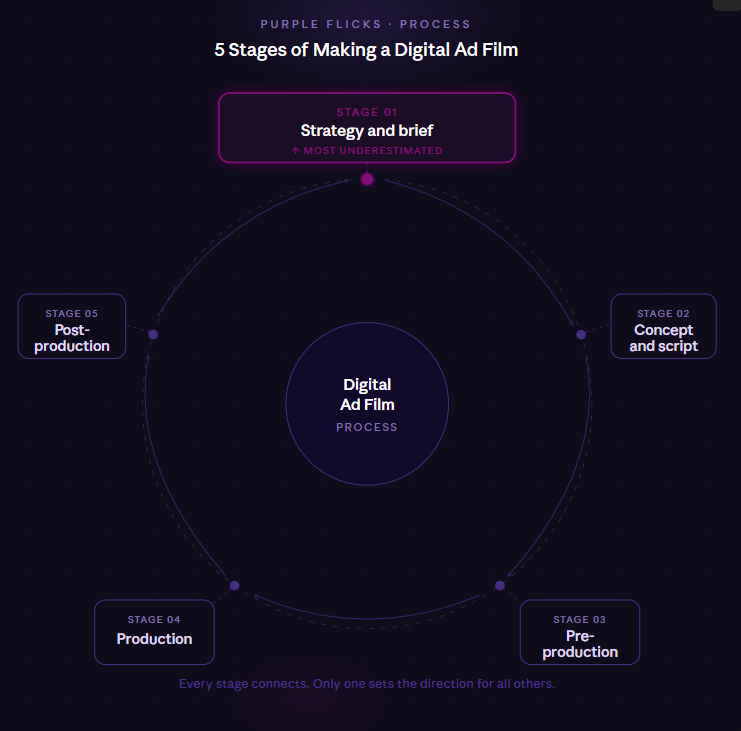
Here is how we actually make a digital ad film, and where the process tends to break down.
Stage 1: Strategy and Brief – The Stage Every Brand Underestimates
Every digital ad film starts with a question that most brands skip: What is this film actually supposed to do?
Not in any imprecise sense. Is it raising awareness, increasing conversions, retaining existing customers, or launching a product? Which platform will it be hosted on? Who is watching it, and what do they already know about the category? What do we want them to feel and do after the film ends?
We’ve seen briefs arrive with scripts attached, and the scripts are usually rather good. The idea is sharp, and the writing is clean. But a terrific story based on an uncertain goal can only go so far. Even the best-crafted film ends up communicating to everyone in general and no one in particular if it does not know what it is trying to do, who it is talking to, or where it will be shown.
This stage takes time. It involves conversations, not just a form to fill. And it is the single biggest difference between a digital ad film that performs and one that just looks nice.
| STAGE 01
Strategy and Brief Define the objective, platform, audience, and outcome before a single frame is planned. This stage is the foundation of every great digital film production. |
Stage 2: Concept and Script Development
Once the brief is locked, the real creative work begins. A digital ad film is not a shorter version of a TV commercial. It is a different format with different rules; a viewer decides in the first three seconds whether the next thirty are worth their time, the hook has to work without sound, and the narrative has to carry even when someone is watching on a six-inch screen while commuting.
Good script development at this stage means writing for the platform, not just for the brand. It means knowing that a film designed for Instagram Reels needs a different opening than one built for YouTube pre-roll. It means building in a visual language that works before a single frame is shot.
| STAGE 02
Concept and Script Write for the platform and the audience & not just the brand. The script is where ad film services earn their value. |
Stage 3: Pre-Production
Pre-production is where most of the real work happens — even though it looks nothing like filmmaking from the outside. Locations get scouted and locked, cast gets confirmed, shoot schedules get built around real constraints, and every approval that can happen before the shoot day does. By the time the crew shows up on set, the decisions have already been made.
This matters more than most brands realise. A shoot day is expensive. Solving problems on set, a location that does not work, a brief that was never quite clear, a sequence no one thought through, costs time and money that could have been avoided two weeks earlier. The brands that treat pre-production as seriously as the shoot itself are almost always the ones who walk away with a film that actually matches what they imagined.
| STAGE 03
Pre-Production Plan everything that can be planned. The quality of digital film agency is decided long before the camera turns on. |
Stage 4: Production
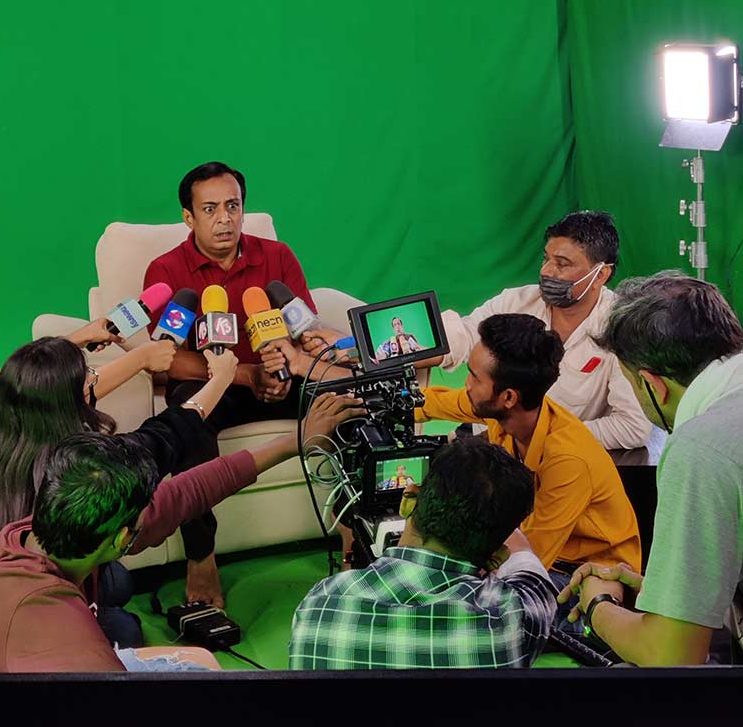
The shoot is where everything becomes visible: the locations, the cast, the shot plan, and the decisions made in every stage before this one. When those decisions are solid, a shoot day moves fast and delivers more than expected. When they are not, the problems do not announce themselves as planning failures. They show up as lost time on set.
Digital ad film production today is leaner than it has ever been. Smaller crews, tighter schedules, modular shot plans, and a single well-run day can produce a hero film, vertical cuts, short-form edits, and platform-ready formats all at once. The output is not determined by how long the shoot runs. It is determined by how well everything before it was prepared.
| STAGE 04
Production Execute what was planned. Lean crews and modular shooting mean more assets per shoot day, that is how great video production services deliver more for less. |
Stage 5: Post-Production and Platform Delivery
Editing, colour grading, sound design, music, subtitles, and format adaptation for every platform the film will live on. This is also where data starts to matter because the best post-production teams are not just cutting a film, they are cutting it with performance in mind. Which version leads with the strongest hook? Which cutdown is built for sound-off viewing? Which format is optimised for the first scroll?
A digital ad film is not finished when the edit is approved. It is finished when every version of it is ready for every platform it is going to live on.
| STAGE 05
Post-Production and Platform Delivery One shoot, multiple platform-ready formats. Post is where the digital ad film earns its place in the feed. |
The brands winning with digital video right now are the ones treating the brief as seriously as the shoot.
Why Brands Rushing Stage One Is a 2026 Problem
The pressure to produce content faster has pushed many brands to skip strategy entirely and go straight to production. The result is a library of films that look polished but do not connect, because no one decided what they were connecting to in the first place.
The brands we see winning with digital video right now are the ones treating the brief as seriously as the shoot. They are asking harder questions upfront, building films with a clear job to do, and measuring what actually happens after the film goes live. AI tools are making production faster and cheaper, which means the creative and strategic decisions made before the shoot matter more than ever, not less.
If your brand is still treating the digital ad film as a one-time project, 2026 is the year to build a proper process around it. The brands that figure this out early will have a serious head start on the ones still rushing Stage One.